
Vital Signs: Is Your Medical Content Flatlining?
By Laura Lawrence | May 27, 2026

Paging Dr. Personality! Let’s take a quick course in how to take that medical content and REALLY bring it to life!
As a Social Media Manager with several doctor clients, it was initially challenging to tackle content that fell outside my comfort zone. I found that clients who were product-focused, like a bubble tea shop, were easier to approach when it came to writing captions and putting together reels and graphics. Details about flavors, personal stories about the owners, giveaways, and an abundance of visual assets felt straightforward and intuitive. So, when I was assigned a TMJ and Sleep Doctor account, I was immediately intimidated. What did I know about chronic Temporomandibular Joint disorders or pediatric sleep apnea symptoms? What in the world is bruxism? A DEKA Nd:Yag laser? Huh? Here’s what I learned:
#1 Repeat after me: “I am not a doctor, and I am not a specialist in this field.”
Really, though. I know it sounds wild, but I approached my first medical client with the unrealistic expectation that I needed to master the entire medical landscape overnight. That’s simply not feasible, nor is it necessary. As content creators, our job is to take the information we have and find creative, fresh ways to get that information across to our audience. I began carving time out of my workday to devote to learning the basics. I studied my client’s website, watched webinars and footage of her at training events, and read up on research articles she’d written. It also helped that she was local, and I could visit the office to see various medical equipment up close.
#2 Don’t be afraid to ask questions
Clarity is the key to understanding. If there are any questions about procedures, medical terms, equipment, appliances, patient confidentiality, etc., just ask! It might require a quick search online, or a deeper conversation with your client. Once you get that clarification, create a space where you can go back and reference that information—whether it’s a Google Doc, a spreadsheet, or a project management tool—so that it becomes second nature.
#3 Shop around for concepts, even if it means going OUTSIDE of your medical algorithm
When brainstorming content, don’t be afraid to apply current trends in social media to your medical concepts. Unless it’s a specific client request to avoid this path, have some fun thinking outside the box! I like to get inspiration from other accounts through my client’s reels feed. But if the algorithm is constantly feeding you one specific style of content, try stepping outside the medical bubble completely to see what else is out there. For instance, I’ve literally used my bubble tea client’s feed to scout for trending audio clips that I could flip and apply to my medical accounts.
#4 Make it relatable
On my client roster right now are two TMJ accounts and a dermatology account. Medical jargon can feel heavy and a little overwhelming, and keeping people engaged while trying to teach them something is a real tightrope walk. My advice? Just humanize it! Even if your client’s primary audience is also doctors, it still needs to be engaging. Think about creating a connection through empathy and maybe even a little humor. Emotional connection to your content is the hook that brings them in and makes them curious to learn more. I’ve recently seen medical content trends where the focus is less on what their services are and more about the experience of working in a medical office setting. Whether it’s a receptionist dancing to the music played when on hold, or the reaction to a patient canceling at the last minute, the purpose of these types of content is to create connection. Of course, clinical expertise and patient education should remain your core pillars, but lighter lifestyle content serves as a strategic gateway to capture a broader audience.
#5 Ditch the over-curated aesthetics and get real
Spend less mental energy on a curated feed, and more attention on the raw, real moments. I shifted my focus away from sterile, static visuals to prioritize raw, value-driven messaging. I used to obsess over uniform reel covers just to maintain a perfectly manicured grid. But what I realized after digging more into analytics was that posts using pictures of an audience of doctors in a recent continuing education moment or a face-to-camera clip of a doctor educating the audience on a “Did you know?” topic outperformed posts that used stock imagery or overly curated graphics.
#6 Make infographics your new BFF
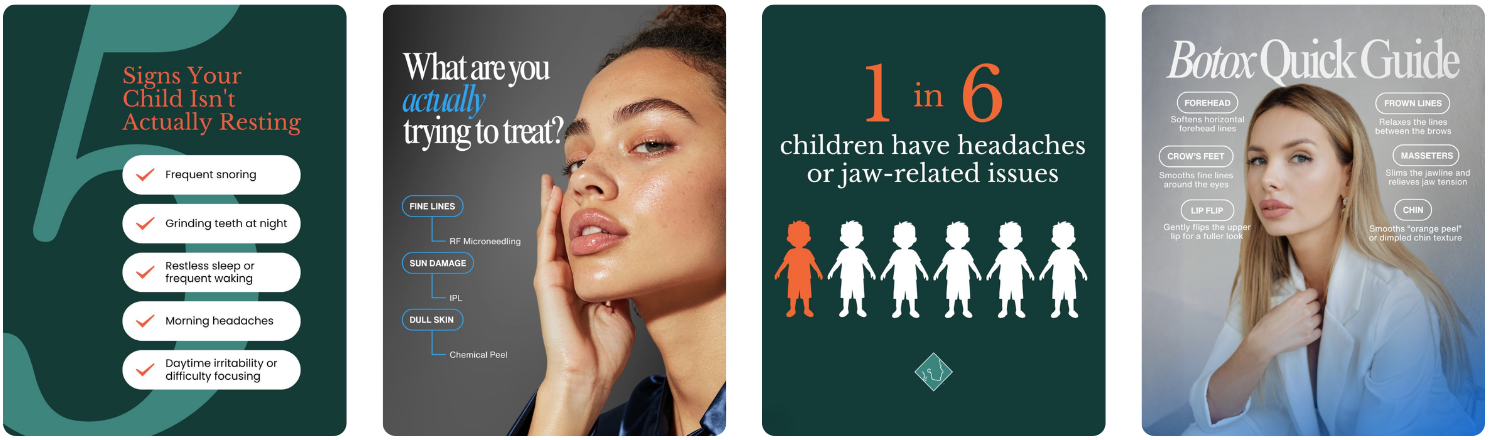
There are those of us who learn best audibly, and then there are those of us who need to SEE it. When translating dense statistics or multi-step symptoms, a clean infographic template is your greatest asset. I have one infographic template in my arsenal that I know performs well, no matter what the information is that I plug in. “5 Signs of Pediatric Sleep Apnea”, “6 Breakfast Foods That Promote Sleep”, “6 Benefits of Nasal Breathing”, … I use Canva to find a simple graphic and then a 1-2 word description underneath. It’s an efficient (and effective!) way to break down complex medical insights into digestible, high-impact visuals.
But wait! There’s more!
If you’re reading this and you ARE the client, the specialist extraordinaire, know that your information matters, and the goal is to get your audience to care about the work that you do and that you’re so passionate about. I get it - There are some that prefer to stay behind the camera. But if you’re up for it, getting your face on screen is absolute magic for building trust. At the end of the day, patients aren't just choosing an office; they're choosing you. Offer Q&A content, FAQs, Did you know’s, and most importantly, share your story.
STEAL MY IDEAS

“Hallelujah” Trend
Use Justin Bieber's “Hallelujah” over a single video clip of the office space or a procedure. On-screen text lists all the benefits of that service or practice, followed by the word “hallelujah”.
“Myth vs. Fact” Green Screen
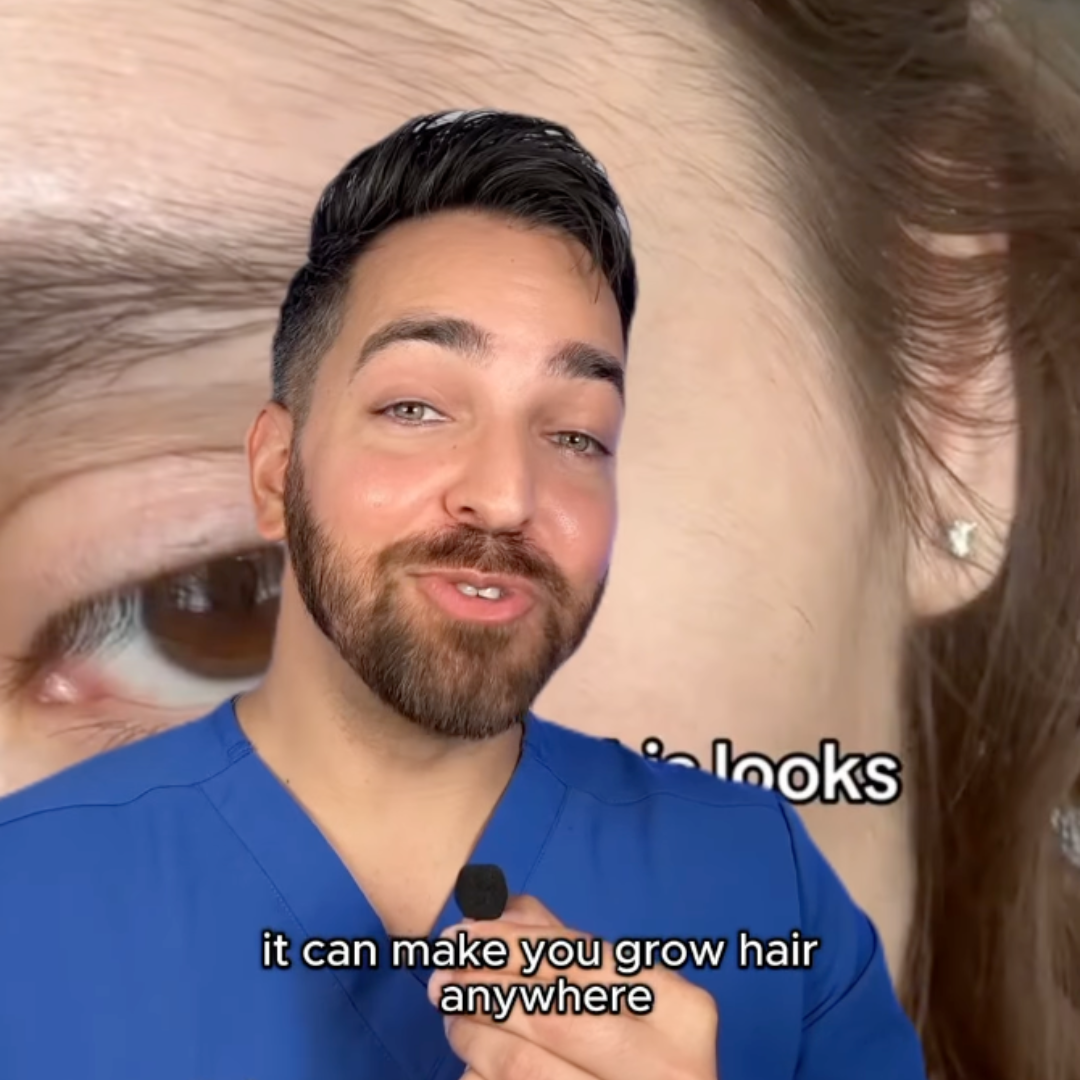
The doctor uses the Instagram/TikTok Green Screen tool to stand in front of a screenshot of a common, misleading medical myth found on Google or Reddit. Point to the screen, shake your head “no,” and then speak directly to the camera to explain the actual medical truth.
“Day in the Life” Timelapse
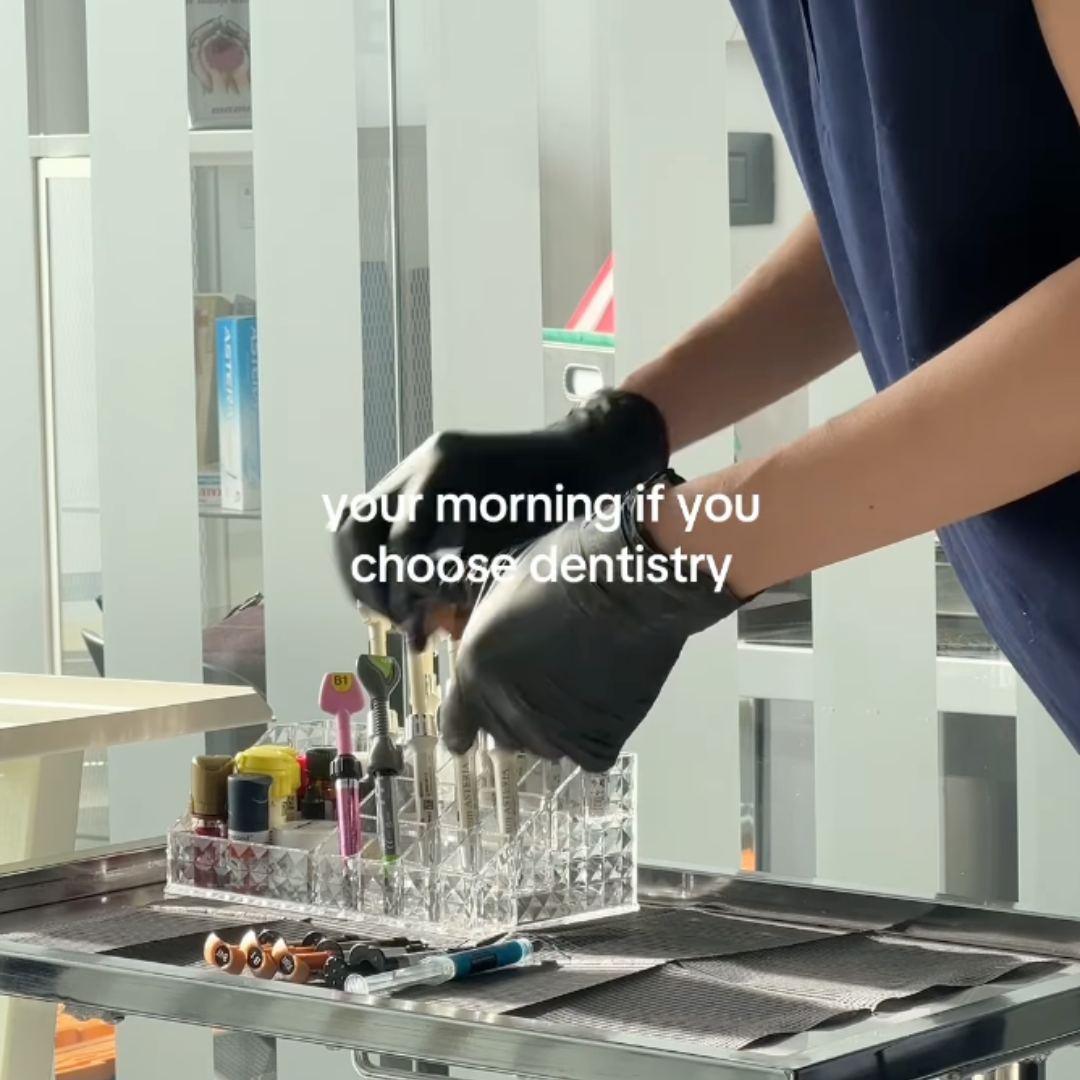
A high-speed, 5-10 second timelapse video of the doctor prepping their office, looking over charts, or setting up a piece of advanced equipment. Pair it with a trending, upbeat audio track. On-screen text can say something simple like: “Just another day treating [insert specialty, e.g., TMJ] symptoms.”
“Before & After” Lifestyle Slide
Instead of showing a graphic or gory medical “before and after,” show a lifestyle change through a two-slide carousel or a split-screen reel.
Left side/Slide 1: A stock photo or video of someone tossing and turning in bed (The Before). Right side/Slide 2: A video of the patient smiling, drinking coffee, looking energized (The After).


LAURA LAWRENCE
Laura is a Senior Social Media Content Creator & Editor at AMR Digital. When she’s not writing and creating amazing content, you can find her tending to her chicken coups, teaching Jazzercise courses, or adventuring with her husband and kids!